As founders, we’re obsessed with using AI for growth—to acquire users, to optimize marketing, to build products faster. We celebrate the power of a good prompt and the efficiency of an automated workflow. But what if that same technology held the key to solving some of the world’s most pressing challenges?
What if the tools we use to build our startups could also be used to rebuild lives?
This isn’t a question about the distant future; it’s about the reality of today. This article explores five practical, real-world examples of how AI is being used right now in the humanitarian sector. This isn’t science fiction; it’s a look at how accessible AI tools can make a tangible impact in education, healthcare, disaster response, and more.
It might just change the way you look at your own toolkit.
1. Education in Crisis Zones: The Personal AI Tutor
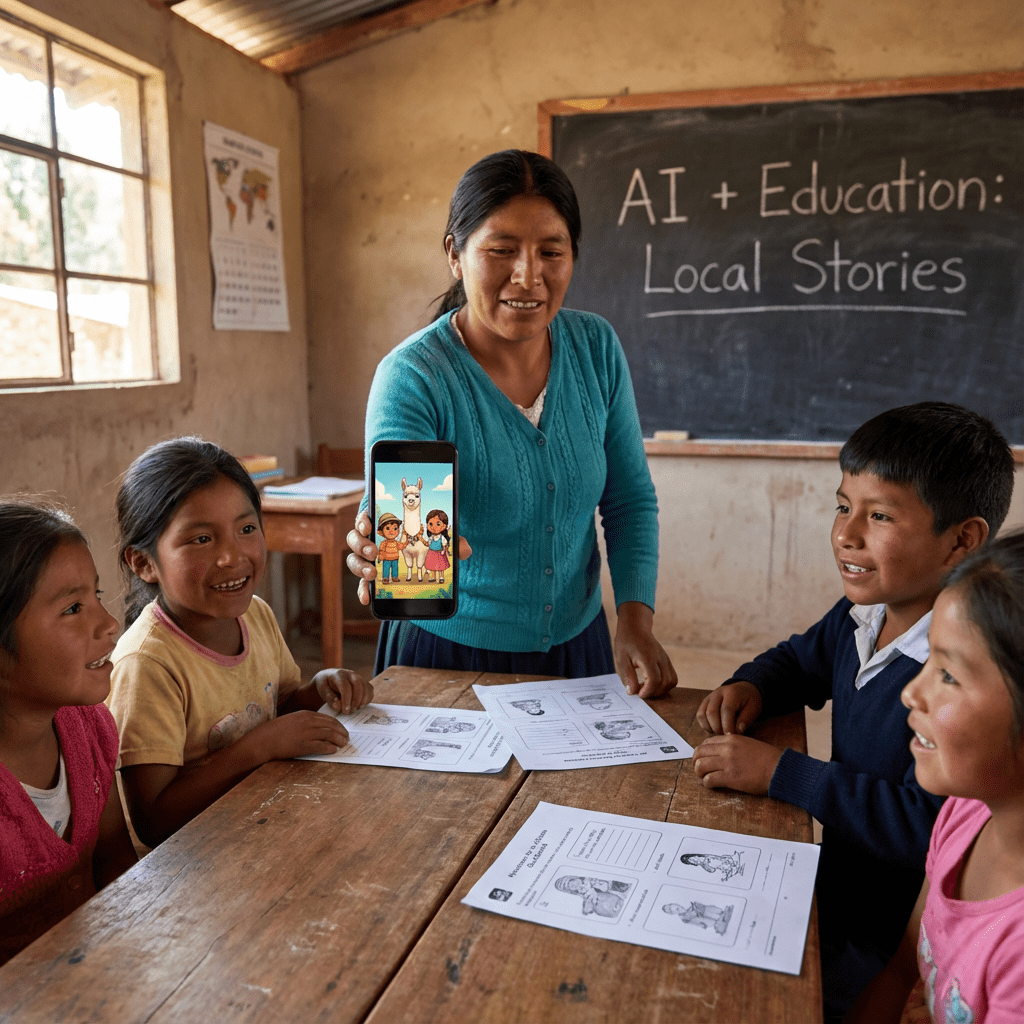
The Problem: Providing a consistent, quality education to millions of displaced children in refugee camps or crisis zones is a monumental challenge. A lack of trained teachers, overcrowded classrooms, and language barriers can make meaningful learning almost impossible.
The AI Solution: AI-powered adaptive learning platforms, delivered on low-cost tablets. These platforms can assess a child’s knowledge level and create a personalized learning path, adjusting the difficulty in real-time. They can provide lessons in a child’s native language and offer instant feedback, acting as a “personal AI tutor” when human teachers are stretched thin.
The Connection: The same AI that personalizes a user’s onboarding experience in your SaaS app can personalize a child’s entire education, giving them a chance to build a future.
2. Healthcare in Remote Areas: The AI-Powered Diagnosis
The Problem: A rural clinic in a remote village may have a dedicated nurse, but it almost certainly lacks a team of specialists. A patient might present with a rare skin condition or an ambiguous X-ray, and without a specialist’s eye, a critical diagnosis can be missed.
The AI Solution: AI-powered diagnostic tools that can analyze medical images. A local healthcare worker can take a photo of a skin lesion with a smartphone, and an AI model can analyze it against a database of millions of images to identify potential signs of skin cancer with incredible accuracy. This allows them to flag critical cases for a remote doctor, saving lives with simple, accessible technology.
The Connection: The same computer vision AI that helps a retail app identify a product in a photo can help a nurse identify a life-threatening disease.
3. Disaster Response: The 30-Minute Damage Assessment
The Problem: After an earthquake, flood, or hurricane, the first 48 hours are critical. Response teams need to know which areas are hit hardest immediately. In the past, this meant manually analyzing satellite photos, a process that could take days, costing precious time and lives.
The AI Solution: AI models trained to rapidly analyze satellite imagery. These models can identify damaged buildings, blocked roads, and flooded areas in a matter of minutes. This creates an instant “damage map” that allows NGOs and emergency services to direct resources, rescue teams, and medical supplies to the most critical locations first.
The Connection: The same AI that analyzes satellite data for an agricultural tech startup can be used to guide rescue teams and save lives in the chaotic aftermath of a disaster.
4. Food Security: The AI Agronomist in a Farmer’s Pocket
The Problem: Small-scale farmers in developing nations are the backbone of the global food supply, yet they are highly vulnerable to crop failure from pests, disease, and unpredictable weather. A single failed harvest can be catastrophic.
The AI Solution: Simple, AI-powered mobile apps. A farmer can take a picture of a plant leaf, and the AI can diagnose the disease or pest, providing immediate, low-cost treatment advice in the local language. These apps can also use weather data to recommend the most resilient crops to plant and the optimal time to plant them.
The Connection: The same predictive analytics AI that forecasts customer churn for a subscription business can be used to forecast crop yields and prevent famine.
5. Combating Misinformation: The Early Warning System
The Problem: In conflict zones or areas of political instability, the spread of “fake news” and hate speech on social media can incite real-world violence, endanger aid workers, and destabilize entire communities.
The AI Solution: Using Natural Language Processing (NLP) models to monitor public social media channels. These AIs can be trained to detect patterns of hate speech, the rise of dangerous narratives, or coordinated misinformation campaigns. This gives humanitarian organizations an early warning system, allowing them to launch counter-messaging campaigns, protect vulnerable groups, and alert local authorities before violence erupts.
The Connection: The same AI that powers a brand’s social media sentiment analysis can be used as a digital peacekeeper to protect a community from violence.
Conclusion: A New Question to Ask
From personalized education to disaster response, AI is not just a tool for business efficiency; it is a force multiplier for human empathy and ingenuity. The technology to make a difference is no longer locked away in expensive labs. It’s accessible, adaptable, and ready to be deployed.
As a founder, a creator, and a problem-solver, you are at the forefront of this technological revolution.
The next time you use an AI tool to optimize a process, ask yourself a second question: “How could this same logic be used to help someone in need?”
The answer might be the most important idea you ever have.
Manager's Recommendation: Build Custom AI Agents
If you want to turn your data into a custom AI agent for your business without writing code, CustomGPT.ai is the most powerful solution available today.
Build Your AI Agent →Ready to Master AI in 28 Days?
Take the next step in your professional journey with our structured, step-by-step roadmap designed specifically for non-technical founders and professionals.
Start the 28-Day Plan →Recommended hosting (what I use)
If you’re building a WordPress site, Hostinger is a solid budget-friendly option.
Disclosure: This is a referral link (supports the site at no extra cost to you).